What is a 3-in-1 water bottling machine?
A 3-in-1 machine combines bottle rinsing, water filling and capping on one coordinated platform. The catalog-reference XGF family is an automatic PET water platform. It is the core filling step—not the water-treatment system, bottle blow molder or complete packing line.
For a quotation, identify the water product, bottle material and size, neck finish, cap and required output. Carbonated drinks, hot filling and returnable large containers need an application review; this still-water reference must not be assumed suitable for them.
How an automatic 3-in-1 water bottling machine works
Rinsing
Empty bottles enter through the agreed conveyor and handling system, are inverted or positioned, rinsed with the specified medium and drained under defined sanitation conditions.
Filling
Prepared product water reaches the filling bowl and valves at the required flow, pressure and hygiene conditions. Bottle size and fill volume influence the output basis.
Capping
Caps are elevated, sorted, fed and applied with the confirmed closure method. Cap supply, torque, missing-cap detection and discharge remain part of the interface review.
Catalog examples: compare the rating basis before the model
| Published platform example | Catalog output at 500 ml | How to use it in a supplier discussion |
|---|---|---|
| XGF14-12-5 | 6,000 BPH | Ask for the current proposed model, your bottle-specific output, included format parts and test conditions. |
| XGF24-24-8 | 13,000 BPH | Ask for the current proposed model, your bottle-specific output, included format parts and test conditions. |
| XGF50-50-15 | 24,000 BPH | Ask for the current proposed model, your bottle-specific output, included format parts and test conditions. |
Selected reference examples from Allot Tech Beverage Bottling Catalog 2026, pages 9–10. These are published ratings, not stock availability, a price offer or guaranteed output on another bottle.
Check bottle compatibility and included accessories
The catalog lists a 500–2,000 ml bottle envelope, height 170–320 mm and diameter 50–115 mm for its reference series. An envelope alone does not approve a bottle: neck finish, stiffness, base shape, cap and handling parts still require drawings and sample review. Ask the supplier which change parts are included for each format and how changeover will be demonstrated.
- Rinse medium, drainage and connection to the prepared-water system.
- Product-contact materials and the cleaning procedure included in the scope.
- Cap elevator, sorter/feed route, closure settings and missing-cap checks.
- Infeed/outfeed conveyors, guards, controls and installation connections.
- Output test on approved bottles and caps, with reject and stop records.
Request one signed machine schedule that joins the model, application, utilities, accessories and FAT method. It prevents a catalog photograph and a commercial quote from describing different supply scopes.
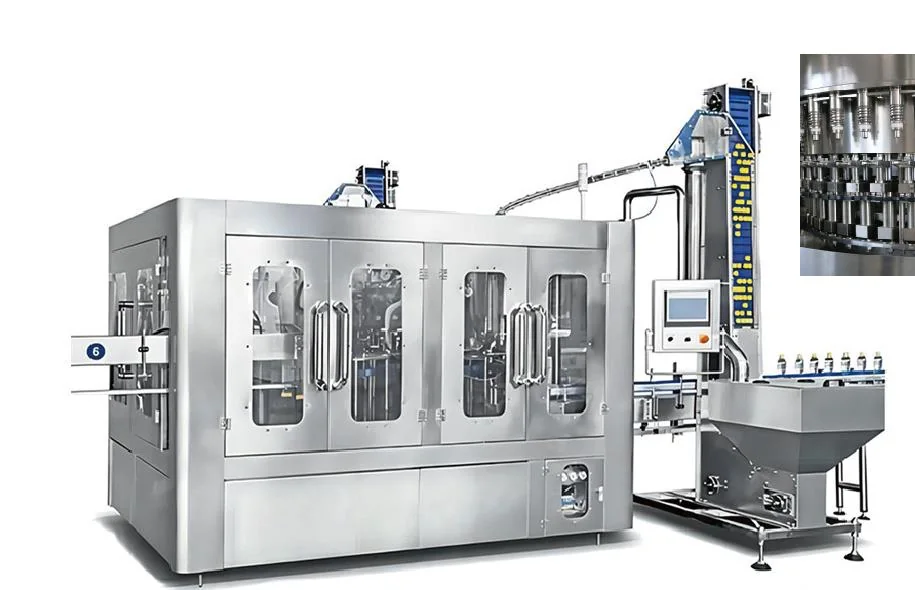
Catalog equipment reference
See the equipment before defining the final specification.
This image supports machine-category identification. Final model, output, materials, dimensions, utilities and included accessories still require a confirmed project quotation.
Source: Allot Tech Beverage Bottling Catalog 2026, pages 6 and 9.
Questions to close before purchase
Is output rated on the actual bottle volume and format?
Output must be stated against the actual bottle volume and format. The Allot Tech catalog XGF table uses a 500 ml reference basis; larger or less stable bottles can change achievable output.
What is included for rinse media, product supply, cap feeding and sanitation?
Confirm the empty-bottle infeed, product-water supply, rinse media, cap elevator and feeder, discharge conveyor, sanitation connections, controls and change parts. These interfaces may sit outside a bare monoblock quotation.
Which material, controls, guards, alarms and change parts are written into the technical agreement?
Record product-contact materials, guarding, PLC and electrical requirements, filling method, cap torque method, alarms, change parts and FAT conditions in the technical agreement rather than relying on a model name alone.
What you should leave with
- Catalog-reference XGF table
- Model-confirmation checklist
- FAT inputs for bottle, cap and water
Continue the buyer decision workflow
How to Verify a Water Bottling Machine Supplier
Verify the supplier's role, proposed equipment, bottle-specific evidence and support responsibilities. Use a document checklist before approving a quotation.
How to Verify a Water Bottling Machine SupplierWater Bottling Machine Quotation: What to Include
Check a water bottling machine quotation for equipment, output basis, format parts, utilities, tests, documents and service. Use a clarification template.
Water Bottling Machine Quotation: What to IncludeWater Bottling Machine FAT: Checklist and Test Records
Prepare a factory acceptance test for water bottling equipment with agreed samples, test conditions, output records, deviations and shipment-release decisions.
Water Bottling Machine FAT: Checklist and Test RecordsRequest a Water Bottling Machine Technical Proposal
Share the core bottle, capacity, machine scope, site, utilities and destination information needed for a technical proposal.
Request a Water Bottling Machine Technical ProposalLast reviewed: 2026-09-14. Technical values and equipment availability are project-specific unless explicitly identified as catalog-reference information.