How much output do you need from a water bottling machine?
State capacity in bottles per hour (BPH) for a named bottle size, then state the good bottles you need in a working day. A published 500 ml rating cannot be reused as a 1.5 L rating. The selected supplier must give an output proposal for each important bottle and identify the test conditions.
A capacity brief with numbers a supplier can answer
Illustrative buyer requirement, not a machine guarantee: 24,000 accepted 500 ml bottles over 8 planned production hours requires an average of 3,000 accepted bottles per scheduled hour. If only 6 hours are allocated to producing bottles after planned cleaning and changeovers, the requirement becomes 4,000 accepted bottles per production hour. Neither calculation yet allows for unplanned stops or rejects.
The supplier should state how its proposed machine can meet that requirement under agreed conditions. Do not select a model only by matching a catalog BPH figure to a daily-average calculation.
| At a proposed 6,000 BPH | Filled water volume by arithmetic | Limit of the calculation |
|---|---|---|
| 500 ml bottle | 3,000 L/h | Does not include rinsing, cleaning, losses or treatment recovery |
| 1,500 ml bottle | 9,000 L/h, if 6,000 BPH were confirmed | Not a claim that the same filling machine maintains that speed |
Supplier capacity-claim normalization
Five fields are required before two BPH claims can be compared.
| Field | Record | Why it matters |
|---|---|---|
| Reference container | Bottle volume, geometry, neck/cap and approved revision | Published output on one bottle does not transfer automatically to another |
| Measurement boundary | Single machine counter, accepted bottles or finished packs | The counting point changes what “output” represents |
| Run conditions | Duration, feed stability, utilities, staffing and planned interventions | A short ideal demonstration is not a sustained acceptance test |
| Quality and rejects | Which bottles count as good and how rejects/stops are recorded | Gross cycles and accepted output are different measures |
| Status | Catalog reference, supplier proposal or signed acceptance value | Only the signed project basis can become the purchase obligation |
What to send and what to ask back
Send a row for each bottle SKU: volume, drawing/sample status, cap, production mix, daily target and available production hours. Ask the supplier to return the proposed model, output at that SKU, assumptions, included change parts and an acceptance method. Keep unknown values marked as unknown.
For a multi-machine package, request confirmation that bottle supply, prepared-water supply and downstream machines support the same project requirement. The purpose here is to compare supplier commitments; a detailed connected-line performance study is a separate engineering deliverable.
Turn the capacity requirement into an FAT test basis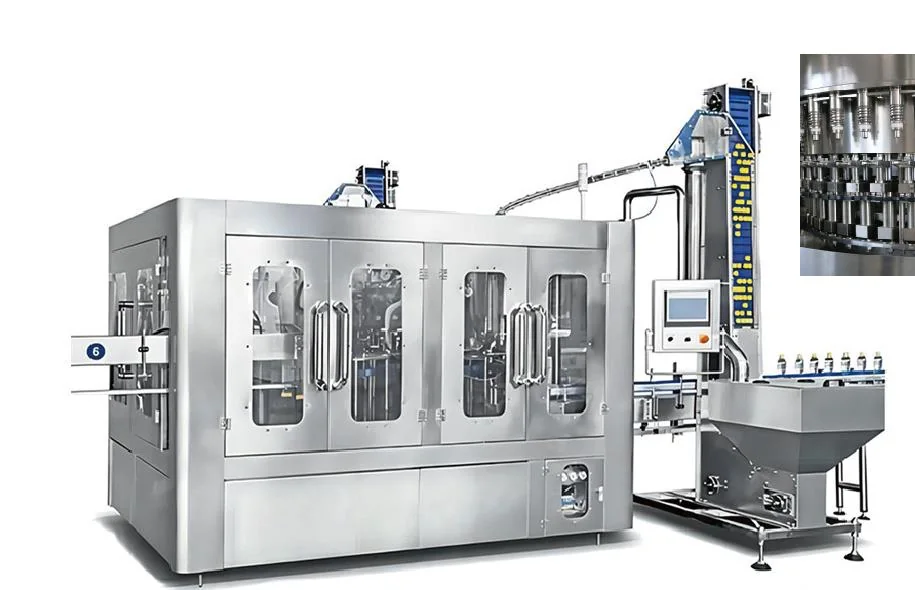
Catalog equipment reference
See the equipment before defining the final specification.
This image supports machine-category identification. Final model, output, materials, dimensions, utilities and included accessories still require a confirmed project quotation.
Source: Allot Tech Beverage Bottling Catalog 2026, pages 6 and 9–10.
Questions to close before purchase
Which catalog platform is closest to the required 500 ml output?
Record whether the number is a catalog reference, supplier proposal or signed acceptance value. The 2026 catalog range uses a 500 ml basis; current platform and project-bottle output require supplier confirmation.
How should rated BPH be adjusted for larger bottle formats?
Do not scale a 500 ml value directly to another container. Ask the supplier for a format-specific schedule tied to the approved drawing or sample and the same counting boundary.
Which upstream and downstream machines need a speed margin?
Compare run duration, utilities, feed conditions, stops, rejects and the definition of good output. Those fields turn two headline BPH numbers into a comparable supplier claim.
What you should leave with
- Catalog-reference context
- Five-field claim-normalization table
- FAT acceptance handoff
Continue the buyer decision workflow
Water Bottling Machine RFQ: Inputs and Copyable Brief
Prepare a water bottling machine RFQ with bottle, cap, output, equipment scope and site inputs. Use a format checklist and copyable supplier email.
Water Bottling Machine RFQ: Inputs and Copyable BriefWater Bottling Machine Quotation: What to Include
Check a water bottling machine quotation for equipment, output basis, format parts, utilities, tests, documents and service. Use a clarification template.
Water Bottling Machine Quotation: What to IncludeWater Bottling Machine FAT: Checklist and Test Records
Prepare a factory acceptance test for water bottling equipment with agreed samples, test conditions, output records, deviations and shipment-release decisions.
Water Bottling Machine FAT: Checklist and Test RecordsRequest a Water Bottling Machine Technical Proposal
Share the core bottle, capacity, machine scope, site, utilities and destination information needed for a technical proposal.
Request a Water Bottling Machine Technical ProposalLast reviewed: 2026-09-14. Technical values and equipment availability are project-specific unless explicitly identified as catalog-reference information.